
Unlocking Profit Potential: Integrating Wholesale Italian Pastries into Beverage-Led Retail for Enhanced Sales and Efficiency
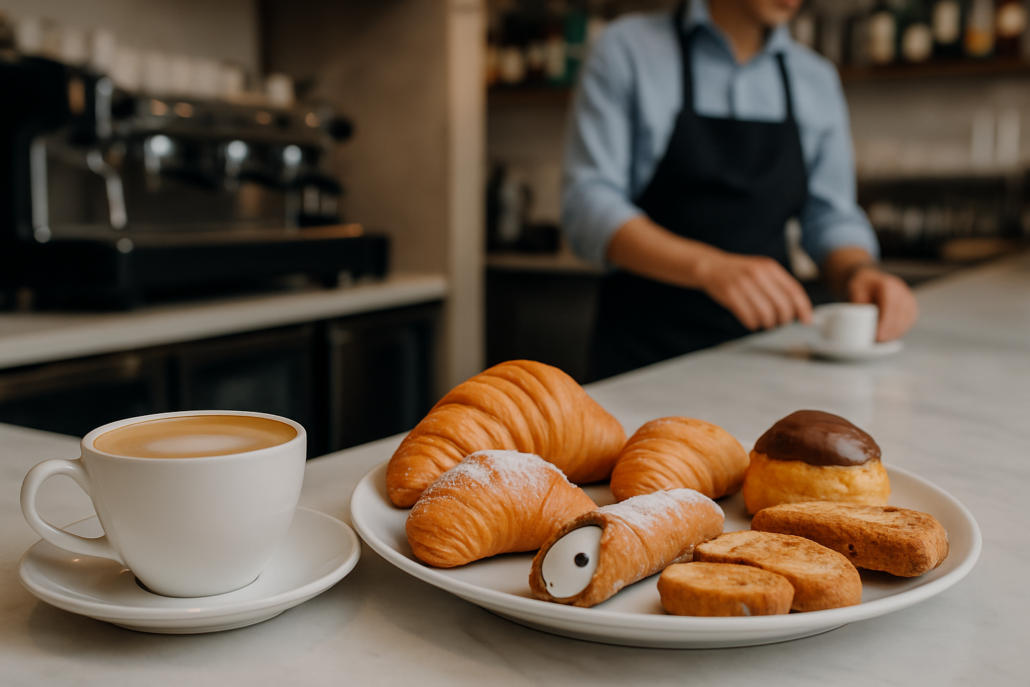
Unlocking Profit Potential: Integrating Wholesale Italian Pastries into Beverage-Led Retail for Enhanced Sales and Efficiency
Category leaders across specialty coffee, c‑store, and airport concessions are all trying to solve the same puzzle: how to drive higher average ticket and incremental daypart sales without adding kitchen complexity or labor you can’t staff. Wholesale Italian pastries are emerging as one of the most efficient levers to pull—if you choose the right SKUs, formats, and supply model.
This brief looks at how beverage-led retailers can use wholesale Italian pastries to grow check size, strengthen their beverage program, and keep back-of-house friction near zero.
Why Italian Pastries Fit Beverage-Led Retail So Well
Italian pastry formats are structurally aligned with beverage-centric concepts:
- Handheld, quick to eat: Cannoli, cornetti, sfogliatelle, and biscotti work for grab-and-go and in-line dwell—no forks, minimal crumbs, fast turnover.
- Complementary flavors to coffee: Hazelnut, pistachio, chocolate, citrus, and almond pair naturally with espresso, cold brew, and milk-based drinks.
- High perceived value, modest portion cost: These products often support premium price points without requiring large physical size.
- Flexible temperature and handling: Many Italian pastries can be served ambient or thaw-and-serve, minimizing the need for ovens and specialized prep.
For operators in high-rent, low-footprint environments—airports, transit hubs, dense urban corners—this combination is hard to beat.
Trend Snapshot: What’s Driving Demand for Wholesale Italian Pastries
Several macro and operational trends are converging to make wholesale Italian pastries particularly attractive right now:
- Specialty coffee normalization: As espresso-based beverages become standard in QSR and c‑stores, guests expect pastry quality that matches their drink experience.
- “Affordable indulgence” behavior: Customers are trading down from full meals but trading up on small treats, especially when bundled with a drink.
- Growth in all-day snacking: Italian pastries fit beyond breakfast—mid-morning, afternoon coffee, and late-night travel dayparts.
- Operational pressure: Labor shortages and small back-of-house spaces make from-scratch baking unrealistic at many beverage-led locations.
- Regional and experiential appeal: Italian cues signal authenticity and “European café” sophistication, useful in airports and urban markets where travelers seek a sense of place.
For category managers and merchandising directors, the question isn’t whether customers will buy premium pastries—it’s how to deploy a wholesale Italian pastry program that maximizes margin and throughput without effectively creating a bakery operation.
Strategic Role: How Italian Pastries Drive Beverage-Led P&L
Before selecting SKUs, clarify what job you want Italian pastries to do in your assortment. Common strategic roles include:
1. Ticket Uplift on Core Beverages
Here the pastry is an accessory sale to your beverage hero SKUs.
- Target pairings: “Coffee + cannoli,” “Cappuccino + cornetto,” “Cold brew + biscotti.”
- Desired behaviors: Add-on at POS, app, and self-service kiosk; frictionless suggestive selling by baristas and staff.
- Merchandising implication: Place pastry fixtures within arm’s reach of the payment area and barista line of sight.
2. Daypart Expansion Without a Kitchen
Italian pastries can extend your offer into breakfast and afternoon snack with minimal equipment.
- Morning: Cornetti, filled croissants, and mini tarts as light breakfast alongside espresso and lattes.
- Afternoon: Biscotti, cannoli, and mini cakes as “3 p.m. treat with coffee.”
- Airport and travel hubs: Pre-flight and connection snacking, where customers want something indulgent but not a full meal.
3. Margin and Brand Differentiation
Italian pastries can carry higher retail prices and help you stand out from generic muffin-and-cookie assortments.
- Premium price signaling: “Sicilian cannoli,” “Pistachio cornetto,” and “Tuscan almond biscotti” support a differentiated brand story.
- Category leadership: A robust Italian pastry offer can justify higher coffee price points and reposition the concept as a European-style café.
Being clear on these roles will guide which SKUs you choose and how you merchandise them.
SKU Strategy: Choosing Italian Pastries That Maximize Margin and Throughput
For beverage-led retailers without full kitchens, SKU selection has to balance guest appeal, operational simplicity, and waste risk.
Anchor SKUs: The Core of an Italian Pastry Set
A practical, high-performing core set for most chains includes:
- Cornetti (Italian croissants)
Role: Breakfast and morning anchor.
Why they work: Strong coffee pairing, recognizable form factor, and flexible fillings.
Recommended variants:- Plain cornetto (baseline, easiest to forecast)
- Chocolate-filled
- Custard/cream or apricot jam filled
Format tip: For no-kitchen sites, prioritize par-baked or thaw-and-serve options that can be finished in small ovens where available but still served ambient if needed.
- Cannoli
Role: Premium indulgence and afternoon treat.
Why they work: High perceived value, flexible size (mini vs. full), and strong upsell with espresso and dessert-style beverages.
Recommended variants:- Classic ricotta with chocolate chips
- Pistachio-topped (for visual appeal and premium pricing)
- Mini cannoli assortment for catering and multi-unit purchase
Format tip: Consider pre-filled, frozen mini cannoli for speed; or shells + pre-made filling for higher-end locations with more labor.
- Biscotti
Role: All-day, low-waste add-on item.
Why they work: Shelf-stable, small footprint, and ideal for register or self-checkout fixtures.
Recommended variants:- Almond biscotti (classic)
- Chocolate-dipped biscotti (premium tier)
- Seasonal flavors (orange-anise, hazelnut, etc.)
Format tip: Individually wrapped or small multi-packs; easy to sell at airports and convenience formats.
- Sfoglie and sfogliatelle (layered pastries)
Role: Visual hero and premium pastry tier.
Why they work: Distinctive look in the case, strong “authentic Italian” signaling.
Recommended use: Select flagship cafés, airport flagship units, or urban sites with higher check averages.
Format tip: Often best as frozen, bake-off or thaw-and-serve to maintain crisp texture.
What to Avoid in a Low-BOH Environment
- High-labor filled items requiring on-site piping or glazing at peak times if you don’t have dedicated pastry staff.
- SKUs with ultra-short ambient shelf life that collapse or weep within a few hours unless they can be kept chilled on display.
- Too many flavor variants of the same base (e.g., six cornetto flavors) that complicate forecasting and increase waste.
Start with a small, disciplined core of 4–8 SKUs, then expand or rotate seasonally once the operational rhythm is stable.
Format Decisions: Frozen, Thaw-and-Serve, and Ambient
Most beverage-led locations will rely on one or more of these formats for Italian pastries:
1. Fully Baked, Frozen Thaw-and-Serve
Best for: C‑stores, airports, and coffee bars with no ovens and limited labor.
Pros:
- Minimal prep—simply thaw, tray, and display.
- Consistent portioning and appearance across units.
- Lower training burden; easy to integrate with limited staff turnover.
Cons:
- May have shorter post-thaw shelf life than ambient products.
- Texture can be less “fresh-baked” than par-baked options.
2. Par-Baked Frozen (Optional Oven Finish)
Best for: Higher-volume coffee chains and airport cafés with small ovens or rapid-cook equipment.
Pros:
- “Fresh from the oven” aroma that boosts beverage sales.
- Ability to bake in waves aligned to peak traffic, reducing waste.
- Premium positioning and potential for higher price points.
Cons:
- Requires disciplined baking schedule and staff ownership.
- Risk of inconsistency if bake times and handling vary.
3. Ambient and Shelf-Stable (Biscotti, Packaged Pastries)
Best for: High-traffic convenience retail, transit, and check-lane merchandising.
Pros:
- Very low waste risk (long shelf life).
- Easy to distribute and merchandise; no refrigeration or thawing.
- Ideal for multi-channel selling (front counter, grab-and-go, near coffee dispensers).
Cons:
- Less “fresh bakery” perception than in-case pastries.
- Harder to command premium pricing without strong branding.
Choosing the Right Mix by Channel Type
- Specialty coffee chains: Mix of par-baked (for cornetti and sfogliatelle) plus thaw-and-serve cannoli and ambient biscotti.
- Convenience retail: Primarily thaw-and-serve and ambient; one or two hero in-case SKUs, plus packaged biscotti at coffee stations.
- Airport concessions: Thaw-and-serve for speed and consistency; highlight one or two baked on-site items where equipment allows to lift perceived quality.
Operational Design: Maximizing Throughput Without a Kitchen
The success of a wholesale Italian pastry program in beverage-led formats depends on how seamlessly it integrates with existing workflows.
1. Handling and Prep Workflow
Design a simple, repeatable flow from delivery to display:
- Delivery and storage: Frozen products go directly to freezer; ambient pastries (like biscotti) to a dry storage zone near the front-of-house.
- Thawing protocol: Standardize:
- Where products thaw (walk-in, countertop, refrigerated display).
- Thaw time windows (e.g., overnight vs. same day).
- Labeling (date/time stickers for food safety and waste tracking).
- Display build: Assign specific roles: who pulls product, who sets the case, and at what times in the day.
2. Merchandising for Speed and Attach Rate
For beverage-led retailers, merchandising should be designed to increase beverage attachment, not compete with it.
- Place pastries in the beverage path: Between order and pickup, where guests are waiting and more receptive to impulse purchases.
- Use visual cues: Clear Italian naming (“Cornetto,” “Cannolo Siciliano”) plus a brief, plain-English descriptor improves trial.
- Bundle offers: Program PLUs and POS prompts for “Coffee + pastry” pricing to streamline upselling.
- Align portion size with drink size: Mini cannoli with espresso; full cornetti with large lattes or cappuccinos.
3. Labor and Training
Keep the program executable by baristas and c‑store staff, not pastry specialists.
- Short training modules: One-page SOPs with photos for receiving, thawing, and display; 10–15 minutes per new hire.
- Clear sell stories: Provide simple pairing scripts:
- “Would you like to add an almond biscotti to dip in your latte?”
- “We have fresh cornetti; they go really well with a cappuccino.”
- Limit SKU complexity: Fewer SKUs mean faster training and fewer errors at POS.
Supplier Strategy: Evaluating Wholesale Italian Pastry Partners
Selecting the right wholesale partner is as critical as choosing the right products. Category managers should evaluate suppliers across five dimensions.
1. Product Authenticity and Quality
- Ingredient standards: Butter vs. margarine, real nuts and chocolate vs. flavored compounds, clean label preferences where appropriate.
- Texture and flavor after holding: Test products not just at “moment of bake” but after 2–4 hours on display and at end-of-day.
- Regional authenticity: For higher-end concepts and airport locations, consider suppliers that can articulate clear Italian regional styles (e.g., Sicilian cannoli, Neapolitan sfogliatelle).
2. Formats and Case Sizes for Your Footprint
- Case pack options: Right-size case counts to your unit sales to reduce waste (especially for cornetti and filled pastries).
- Mixed cases for test markets: For new rollouts or smaller markets, mixed assortments help gauge demand by SKU.
- Packaged vs. bulk: Decide where you want individually wrapped items (biscotti at c-store coffee islands) versus tray-packed for café display.
3. Operational Support
- Preparation guides: Clear thawing and baking instructions tailored to your equipment.
- Planograms and case layouts: Visual merchandising guides that your field teams can adapt quickly.
- Training materials: Short videos or one-pagers your L&D team can plug into existing training platforms.
4. Supply Chain Fit
- Distribution footprint: Ensure the supplier can service your key geographies consistently—especially critical for airport and travel locations.
- Lead times and minimums: Align with your ordering cycles and backroom storage capacity.
- Multi-temperature logistics: Confirm integration into your frozen and ambient networks, or evaluate third-party distribution where needed.
5. Data and Collaboration
- Category insights: Look for partners with meaningful data on what sells in beverage-led channels, not just in bakeries.
- Menu optimization support: Ability to help test and refine SKU sets by region, daypart, and format.
- Innovation cadence: Seasonal or limited-time Italian pastry flavors (e.g., lemon ricotta in summer, chocolate-hazelnut in winter) that slot into your broader promotional calendar.
Financial Framework: Making the Business Case for Italian Pastries
To justify a wholesale Italian pastry rollout, build a simple business case around four levers: attach rate, margin, waste, and labor.
1. Attach Rate and Average Ticket
Model conservative, realistic attachment scenarios:
- Baseline: 5–10% of hot coffee transactions add a pastry in early phases.
- Optimized: With effective merchandising and training, many chains see pastry attach rates climb significantly higher.
- Beverage mix impact: Italian pastry may shift some customers toward higher-margin beverages (e.g., choosing a cappuccino with a cornetto instead of drip coffee alone).
2. Gross Margin Contribution
Wholesale Italian pastries typically support strong dollar margins per unit. To evaluate:
- Compare per-unit margins versus your current pastry set or against alternative snack categories.
- Account for mix shift (e.g., customers choosing a higher-priced cannolo instead of a lower-priced cookie).
- Overlay equipment amortization if you add small ovens, but spread that cost over multiple products (not just pastries).
3. Waste Management
The main financial risk in pastry programs is waste. Mitigation strategies include:
- Tiered assortment: Combine shorter-shelf-life cornetti with long-life biscotti to balance the set.
- Wave baking / thawing: Smaller, more frequent waves tied to traffic patterns.
- Daypart markdowns: End-of-day discounting in select formats (especially in airports where late-night flights create incremental demand).
4. Labor and Complexity Costs
Compared to scratch baking, wholesale Italian pastries can add meaningful revenue with marginal labor:
- Measure incremental steps: Receiving, storage, thawing, and display building; keep each step as low-touch as possible.
- Target cross-utilization: Have existing barista or front-of-house roles manage pastry handling instead of adding dedicated staff.
- Monitor throughput impact: Ensure pastry service doesn’t slow beverage production at peak; if it does, adjust display or POS flow instead of cutting SKUs prematurely.
Pilot and Scale: A Practical Rollout Roadmap
To de-risk the integration of wholesale Italian pastries, structure your approach in three phases.
Phase 1: Concept and Assortment Test
- Select a small group of representative pilot stores:
- One or two high-volume specialty coffee locations.
- One convenience format site.
- One travel or airport unit if applicable.
- Launch a focused core set:
- 1–2 cornetti SKUs.
- 1 cannoli SKU (or mini assortment).
- 1–2 biscotti SKUs.
- Instrument your POS for:
- Attach rates by beverage type.
- Sales by daypart and SKU.
- Impact on beverage mix (e.g., more espresso-based drinks).
Phase 2: Optimize for Operations and Profit
- Refine par levels and baking/thaw schedules based on traffic curves.
- Adjust merchandising (case layout, signage, bundle offers) to lift attachment.
- Address bottlenecks:
- If case fill takes too long, simplify assortment or tray configuration.
- If waste is high, reduce slow-moving SKUs and add more ambient items.
Phase 3: Scale with Guardrails
- Roll out to additional units with:
- Standardized core SKU set by format (coffee bar, c‑store, airport).
- Clear SOPs and merchandising standards.
- Built-in reporting to track pastry performance at unit and region levels.
- Add seasonal Italian pastry LTOs only after the base program is stable.
- Continuously test regional variations (e.g., stronger cannoli presence in markets with higher Italian heritage or tourism).
Conclusion: Turning Italian Pastries into a Scalable Beverage Companion
Wholesale Italian pastries give beverage-led retailers a rare combination: premium check-building products that integrate into existing operations without turning every unit into a full bakery. With the right SKU set, formats, and supplier partnership, you can:
- Raise average ticket through smart beverage-pastry pairing.
- Extend your relevance across breakfast and afternoon snack dayparts.
- Deliver a higher-end guest experience with minimal back-of-house complexity.
If you’re considering integrating wholesale Italian pastries into your portfolio, start with a disciplined pilot, use beverage attachment and waste as your primary success metrics, and partner with suppliers who understand beverage-led environments—not just bakery cases. From there, you can scale an Italian pastry program that reliably drives margin, throughput, and brand differentiation across coffee bars, convenience locations, and airport concessions.

