
Remote Bakery Audits: Key Questions to Ensure Quality and Consistency in Wholesale Partnerships
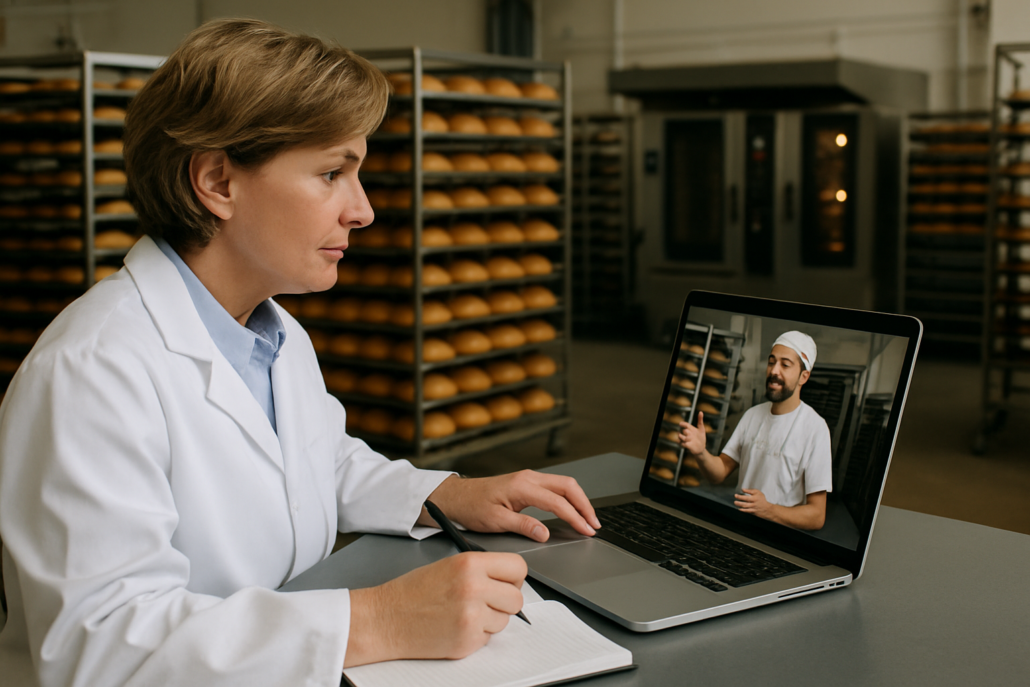
Remote Bakery Audits: Key Questions to Ensure Quality and Consistency in Wholesale Partnerships
Shortlisting wholesale bakeries via samples and pricing is easy. Confidently verifying their quality systems without stepping inside the facility is much harder—especially when you’re responsible for multi-unit consistency, food safety, and brand reputation.
This guide gives procurement leads, culinary directors, and independent restaurant groups a practical checklist of questions to use during a live video QA audit. For each area, you’ll see:
- What to ask on the call
- What proof to request or view live
- Red flags to watch for on camera
- Follow-up probes that separate polished sales talk from real process discipline
How to Structure a Remote Bakery Quality Audit
Before diving into detailed checklists, structure your remote due diligence like a short factory audit:
- Pre-call prep (10–20 minutes)
- Share expected volume ranges, menu applications, and any target specs (e.g., par-bake levels, crumb structure, clean label requirements).
- Request sample documents in advance: a blank COA, spec sheet example, and HACCP/food safety summary.
- Live video walkthrough (30–60 minutes)
- Have them move through ingredient receiving → storage → mixing → makeup → proofing → baking → cooling → packaging → shipping.
- Ask the questions below in real time as you see each step.
- Post-call follow-up (15–30 minutes)
- Request any missing documents, photos of logs, and copies of formal programs referenced on the call.
- Align on trial production runs and shelf-life testing if you move forward.
Use the sections below as a live checklist during the video tour.
1. Ingredient Sourcing & Specifications
Primary questions to ask
- “Walk me through how you qualify and approve new ingredient suppliers.”
- “Which of your ingredients are source-controlled or single-origin, and which are commodity?”
- “Can I see an example ingredient spec and Certificate of Analysis (COA) you require from vendors?”
- “How do you verify that each delivery meets your specifications before it enters production?”
Proof to request or view live
- Digital or printed approved supplier list (names obscured are fine).
- An example ingredient specification sheet (e.g., flour protein range, ash content, blending requirements).
- A recent COA attached to an inbound ingredient lot.
- On video: show receiving area and how they tag or label incoming ingredients (lot codes, dates, supplier).
Red flags
- No documented supplier approval process (“We just use our trusted vendors”).
- They cannot show an example COA or detailed spec for a critical ingredient (flour, yeast, butter, inclusions).
- Ingredient labels in storage with handwritten dates only and no lot or batch traceability.
- Visible unlabeled bags, open sacks, or ingredient bins without clear IDs and dates.
Follow-up probes
- “Show me how you would trace a flour lot from receiving to finished product if there were a quality issue.”
- “What changes when a key ingredient spec shifts? For example, a different flour protein or butterfat.”
- “How often do you review supplier performance and on what criteria?”
2. Food Safety Program & Certifications
Primary questions to ask
- “Which formal food safety programs or certifications do you maintain (e.g., HACCP, GFSI, BRCGS, SQF, local regulatory audits)?”
- “Who is your designated food safety or QA lead, and what is their background?”
- “How do you manage allergen control and cross-contact in the bakery?”
- “When was your last third-party or regulatory audit, and what were the key findings?”
Proof to request or view live
- Copy or screenshot of current certification (where applicable) and audit summary or score, with confidential parts redacted if necessary.
- Brief overview or table of contents of their HACCP or food safety plan.
- On video: show allergen storage, dedicated tools or color coding, and any allergen changeover signs or logs.
- On video: show hand-wash stations, sanitizer buckets, and how PPE is used in production.
Red flags
- No named person clearly accountable for food safety.
- They “have a plan” but can’t share any portion of it or describe critical control points.
- Allergens (nuts, dairy, eggs, etc.) stored next to non-allergen ingredients with no segregation or labeling.
- No visible hand-wash sinks near production, or staff not wearing hairnets/beard nets during live tour.
Follow-up probes
- “Walk me through your process if you discover a foreign object or contamination in a batch.”
- “Show me an example of a completed sanitation record or pre-op inspection form from this week.”
- “How do you communicate food safety updates or changes to staff?”
3. Process Controls for Consistency (Dough to Finished Product)
This is where you separate artisan chaos from disciplined, repeatable baking.
Primary questions to ask
- “Talk me through a typical batch for [your target product] from scaling to packaging. What are the critical control points?”
- “What measurements do you record for each batch to ensure consistency?”
- “How do you document and control scaling, mixing times, dough temperature, proof times, and bake profile?”
- “How is production data captured—paper logs, digital systems, or both?”
Proof to request or view live
- On video: show recipe control (e.g., locked formulas, printed batch sheets, or a digital batching system).
- On video: zoom in on batch records or production logs—you should see entries for time, temperature, operator initials, and lot codes.
- On video: show scales, thermometers, timers, and proofers in active use; ask for a close-up of any sensors or control panels.
- Example of a standard operating procedure (SOP) for a core product.
Red flags
- No written or digital batch records (“Our bakers know it by feel”).
- Visible handwritten recipes taped to walls with no version dates or controls.
- Inconsistent language when describing time/temperature (e.g., “we bake until it looks done” for all products).
- Operators not recording any data during the tour’s active production period.
Follow-up probes
- “Show me a completed batch log from earlier today for .”
- “What tolerance do you allow on dough temperature, final weight, and bake color? What happens when a batch falls outside that range?”
- “How do you train a new baker to follow these controls? Is there a sign-off or observation checklist?”

4. Scaling, Portioning, and Weight Control
Primary questions to ask
- “How do you guarantee unit weight and portion control across runs?”
- “What is your typical weight target and tolerance for [rolls, buns, loaves, cookies, etc.]?”
- “How often are scales calibrated and who signs off?”
Proof to request or view live
- On video: show in-line or bench scales used during production; watch an operator weigh a piece.
- Example of a weight check log showing time, result, corrective action.
- Documentation or sticker tags indicating scale calibration dates.
Red flags
- No documented weight tolerances by SKU.
- Scales present but clearly used as “table space” with no evidence of active checking.
- No calibration record or the last calibration was more than a year ago.
Follow-up probes
- “What is your process when a weight check fails? Show me an example where this happened and what you did.”
- “How do you handle spec differences by customer—for example, a 3.5 oz bun for one brand and 4.0 oz for another?”
5. Fermentation, Proofing, and Bake Quality
For breads, buns, laminated doughs, and viennoiserie, process control during fermentation and baking drives texture, volume, and eating quality.
Primary questions to ask
- “What parameters do you set and monitor for proofing (time, temperature, humidity)?”
- “How do you check that proofed product is ready to bake?”
- “How do you control oven settings and verify color/texture consistency between shifts?”
Proof to request or view live
- On video: show proofer controls (set temperature/humidity) and ask what the target is for the product you’re viewing.
- On video: watch how a baker checks proof readiness (poke test, height markers, timers).
- On video: show oven control panels and monitoring tools (thermocouples, color charts, internal temp checks).
- Any internal color or bake profile standards (photos, physical samples, or spec sheets).
Red flags
- Proofing based purely on “gut feel” with no set ranges for time, temperature, and humidity.
- No consistent method for assessing bake color or internal doneness.
- Ovens clearly overloaded or haphazard loading patterns with no documented rack maps.
Follow-up probes
- “Show me your visual standard or spec for acceptable bake color on [target product]. How do you train new staff on this?”
- “What adjustments do you make for seasonal temperature/humidity changes?”
- “How do you confirm internal bake for frozen or par-baked items?”
6. Allergen Management & Special Diet Claims
Primary questions to ask
- “Which allergens do you handle in this facility?”
- “How are allergen ingredients stored, labeled, and segregated?”
- “Describe your changeover process between allergen and non-allergen runs.”
- “If you produce any ‘free-from’ or gluten-sensitive items, what controls or validations support those claims?”
Proof to request or view live
- On video: show allergen storage areas and labels; look for symbols, colors, or clear wording.
- On video: walk through a production line that has just switched from allergen to non-allergen product; ask to see cleaning tools and logs.
- Example of label artwork showing allergen statements and “may contain” warnings.
Red flags
- Allergens mixed with non-allergens in shared bins or shelves, poorly labeled.
- No documented changeover procedure or absence of validated cleaning steps.
- “Gluten-free” or “nut-free” claims without third-party certification or a clearly described validation process.
Follow-up probes
- “Show me your allergen matrix—how do you track which products contain which allergens?”
- “Have you ever had an allergen-related complaint? What changed as a result?”
7. Sanitation, Pest Control, and Facility Condition
Primary questions to ask
- “How is your sanitation program structured—daily, weekly, and deep cleaning tasks?”
- “Who performs cleaning (in-house team vs. contractor), and how is it verified?”
- “What pest control program do you have in place, and how often is it serviced?”
Proof to request or view live
- On video: show floors, drains, under-equipment areas, and hard-to-reach spots.
- On video: show sanitation tools (color-coded brushes, foaming equipment, chemicals in labeled containers).
- Example of a sanitation schedule and a recent completed cleaning log.
- On video: show a pest control station and its service tag or log.
Red flags
- Standing water, excessive flour dust buildup, or visible residue under equipment.
- No written sanitation schedule or logs, just “we clean at night.”
- Unlabeled chemical containers or chemical storage near ingredients.
- Evidence of pests (droppings, traps overflowing, cobwebs) on camera.
Follow-up probes
- “Walk me through your pre-op inspection before production starts. Who signs off?”
- “Show me today’s sanitation log for this line, including who verified it.”
- “What changed after your last pest control inspection?”
8. Quality Checks, Sensory Evaluation, and Complaint Handling
Primary questions to ask
- “What in-process and finished-product quality checks do you perform for each run?”
- “Who has authority to stop the line or reject a batch for quality reasons?”
- “How do you capture and respond to customer complaints or quality feedback?”
Proof to request or view live
- On video: show any quality control station near the line (cutting boards, scales, thermometers, color charts).
- Example of a finished product checklist or sensory evaluation form.
- Redacted example of a customer complaint record and follow-up actions.
Red flags
- No defined QC checks beyond “visual inspection.”
- No single person clearly responsible for sign-off on quality.
- Complaints handled informally via email or phone with no tracking or root-cause analysis.
Follow-up probes
- “Show me how you document a quality deviation and the steps you took to prevent recurrence.”
- “What are your most common quality issues, and what have you changed to address them?”
- “How do you share complaint trends with the production team?”
9. Packaging, Labeling, and Shelf-Life Control
Primary questions to ask
- “How do you control packaging materials and verify the correct packaging is used for each SKU?”
- “Describe your lot coding, date coding, and traceability system for finished goods.”
- “What shelf-life do you validate for each product (ambient, chilled, frozen), and how is it tested?”
Proof to request or view live
- On video: show packaging line and how labels are applied and checked.
- On video: zoom in on date codes and lot codes on finished cartons.
- Example of label approval process (signed artwork, change control records).
- Summary of shelf-life or stability testing approach (even qualitative).
Red flags
- Finished cases with no visible lot or date code.
- Operators manually picking labels from mixed stacks with no check process.
- No documented shelf-life evaluation; dates set “because that’s what others do.”
Follow-up probes
- “Show me how you’d trace this finished case back through production to ingredient lots.”
- “How do you manage packaging or label changes for private-label customers?”
- “What storage instructions do you recommend for your restaurant customers, and how do you validate them?”
10. Traceability, Recall Readiness, and Documentation
Primary questions to ask
- “If you had to conduct a recall on one SKU today, how would you execute it?”
- “How quickly can you trace from a specific finished lot back to ingredient lots and affected customers?”
- “Have you conducted any mock recalls in the last 12 months?”
Proof to request or view live
- Example of a mock recall report or internal test.
- On video: show document control area (binders, server access, or digital QMS) where records are stored.
- Sample of shipping records that link lots to specific customers (with names redacted).
Red flags
- No formal recall plan; vague references to “calling customers.”
- No mock recalls ever conducted.
- Records stored chaotically, mixed binders without clear indexing, or incomplete electronic records.
Follow-up probes
- “Walk me through your last mock recall: what product, how long did it take, what did you learn?”
- “Who is on your recall team, and how would they communicate with us as a customer?”
11. Capacity, Redundancy, and Service Reliability
Even the best quality system fails you if the bakery can’t reliably supply your group at scale or through disruption.
Primary questions to ask
- “What is your current capacity utilization, and how much headroom do you have for growth?”
- “What backup plans do you have for critical equipment failures or ingredient shortages?”
- “How do you prioritize orders when capacity is tight (e.g., peak seasons, labor shortages)?”
Proof to request or view live
- On video: show key equipment (ovens, mixers, proofers) and ask about redundancy for each class.
- Basic preventive maintenance schedule for mission-critical equipment.
- Example of production schedule that demonstrates planning discipline.
Red flags
- Running near or at capacity all the time with no clear growth plan.
- No documented preventive maintenance; equipment maintained only “when it breaks.”
- Vague or ad hoc approach to order prioritization.
Follow-up probes
- “Tell me about the last major disruption you faced. How were customer orders affected?”
- “If we doubled our volume over 18 months, what investments or changes would you need to make?”
12. Culture, Training, and Team Stability
Culture isn’t a soft topic here; it’s a leading indicator of whether processes are followed when nobody is watching.
Primary questions to ask
- “How do you train new team members on quality and food safety?”
- “What is your turnover like in key roles (mixers, oven operators, line leads)?”
- “How do operators raise concerns or suggest improvements?”
Proof to request or view live
- On video: brief introduction to a production supervisor or QA lead; ask them one or two specific questions.
- Sample of a training checklist for new hires in production.
- Any visual quality or safety boards on the floor (KPIs, near misses, improvements).
Red flags
- Management answers everything; front-line staff never speak on the call.
- No written training material; new hires just “shadow someone.”
- Obvious disengagement on the floor: PPE not worn, shortcuts visible during the tour.
Follow-up probes
- “Can I speak briefly with one of your line leads about how they handle a quality issue?”
- “How do you recognize or reward staff who catch quality or safety issues?”
How to Score and Compare Wholesale Bakeries After Remote Audits
To make remote bakery audits comparable across multiple candidates, turn your notes into a simple scorecard:
- Define 6–8 weighted categories that matter most to your concept, for example:
- Food safety & documentation
- Process controls & consistency
- Allergen & label management
- Sanitation & facility condition
- Capacity & reliability
- Innovation & collaboration ability
- Rate each bakery 1–5 in each category based on:
- Clarity and specificity of answers
- Quality of evidence shown (logs, SOPs, certifications)
- What you actually saw on camera (behavior, cleanliness, orderliness)
- Note deal-breaker red flags, for example:
- No effective allergen control while producing allergen-containing items
- No traceability or recall capability
- Repeatedly evasive answers or refusal to show basic documentation
Use this scorecard alongside product samples and pricing to choose partners that can maintain your brand standards across locations and over time.
Conclusion and Next Steps
A live video walkthrough can reveal as much about a wholesale bakery’s quality systems as an in-person visit—if you ask targeted questions, demand concrete proof, and pay attention to what the camera “accidentally” shows you.
Before your next vendor call, adapt the checklists above into your own audit template. Share it in advance so prospective bakeries know you take consistency, traceability, and food safety seriously. You’ll quickly see which partners are ready for long-term, multi-unit relationships—and which ones are not.
If you’re building or updating your approved bakery list, use this framework across all remote tours so you can compare candidates on the same criteria and move into trials with real confidence.
