
Behind the Dough: How Top Wholesale Bakeries Ensure Pastry Perfection for Hotels and Resorts
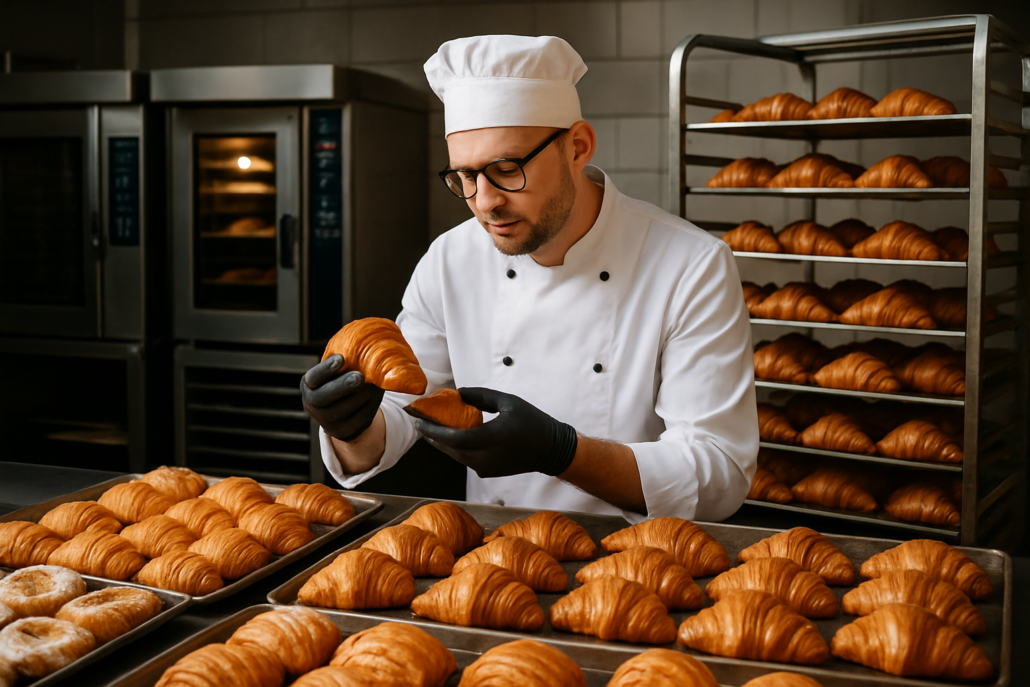
Behind the Dough: How Top Wholesale Bakeries Ensure Pastry Perfection for Hotels and Resorts
When a guest bites into a breakfast croissant or late-night room-service tart, they do not care if it came from an in-house bake shop or a wholesale supplier. They care about freshness, texture, and consistency—every single day, across every outlet on property.
For hotel and resort F&B directors and procurement managers, that raises a practical question: how do top wholesale bakeries actually structure their people, QA checkpoints, and cold-chain systems to deliver that level of consistency at scale?
This case-style walkthrough takes you behind the scenes of a best-in-class wholesale bakery that supplies pastries to multiple four- and five-star hotels in a given region. Use it as a benchmark to evaluate current or prospective suppliers—and to align your own receiving, storage, and menu planning around how these systems really work.
The Scenario: A Regional Bakery Supplying 20+ Hotels
Imagine a regional wholesale bakery serving:
- Urban business hotels with high weekday breakfast volume
- Destination resorts with large buffet spreads and banquet operations
- Airport properties with 24/7 grab-and-go and irregular rushes
The bakery offers par-baked croissants, fully baked Danish, thaw-and-serve petit fours, and frozen ready-to-bake items. Orders cut off at 3 p.m. for next-morning delivery to most properties.
To keep quality consistent across that portfolio, the bakery builds quality assurance around three pillars:
- People: clear roles, training, and communication with hotels
- Process: structured checkpoints from ingredient intake to final loading
- Cold chain: controlled temperature and time from mixing to your pastry case
Here is how that looks in practice—and what it means for you as a hotel or resort leader.
1. How the Bakery Organizes Its Team Around Hotel Quality
In our scenario, the bakery’s organizational structure is built around hotel and resort service, not just generic foodservice volume.
Dedicated roles that influence your pastry quality
- Hotel Accounts Manager
Your main contact for forecasting seasonal volume, special events, and menu changes. They translate your brand standards and outlet realities (buffet vs. à la carte vs. banquets) into production specs. - Technical/QA Manager
Owns product specifications, process controls, and non-conformance handling. This person decides what happens when a batch is slightly off and whether it ever leaves the facility. - Production Supervisors by Product Line
For example: Viennoiserie supervisor, laminated dough specialist, desserts and tarts lead. They manage crew training and enforce process checkpoints on the floor. - Packaging & Dispatch Lead
Controls final checks, lot coding, and truck loading, and coordinates with drivers to protect the cold chain to each hotel zone. - Customer Support / On-Call Pastry Liaison
Available for last-minute issues: short shipments, thawing concerns, reheat instructions, and emergency substitutions.
What to look for as an F&B or procurement lead
When you tour or vet a bakery, ask:
- “Who owns quality decisions when there is a conflict between production speed and product standards?”
- “If my executive pastry chef has feedback on lamination or bake color, who receives it and how is it actioned?”
- “Who monitors hotel order patterns to flag anomalies that might indicate menu or forecast issues?”
Top wholesale bakeries have clear answers, names, and escalation paths—not just “your sales rep.”
2. End-to-End QA: From Flour Delivery to Your Loading Dock
Now walk through the same bakery’s QA system as if you were tracing a batch of butter croissants destined for your Sunday brunch.
Checkpoint 1: Supplier approval and ingredient intake
Goal: stable raw materials, predictable performance.
- Approved suppliers only: Flour mills, dairy providers, chocolate brands, frozen fruit, and eggs are pre-qualified and audited. Specifications cover protein levels, butterfat content, and format (e.g., block butter for lamination).
- Incoming inspection: At receiving, staff check lot codes, seals, basic sensory quality (odor, color), and temperature for refrigerated/frozen goods.
- Non-conformance rules: If butter temps or truck conditions are off-spec, the load is either rejected or isolated, and your account is protected from that batch.
Implication for hotels: This is where consistency in flakiness, volume, and bake color actually begins. When your croissants suddenly balloon or flatten, ingredient variation is often the first suspect.
Checkpoint 2: Ingredient storage and staging
Goal: ingredients are used within optimal shelf life and at the right temperature.
- Zone-based storage: Ambient (flour, dry sugar), chilled (cream, fresh yeast, eggs), and frozen (fruit purees, some butter) are separated, with temperature logs.
- First-in, first-out (FIFO): Ingredient lots are rotated and scanned to avoid expired or out-of-spec stock entering your pastries.
- Staging discipline: Butter and dough components are tempered to specific internal temperatures before lamination or mixing, crucial for uniform layers.
Implication for hotels: Stable staging equals predictable bake-off at your property. If your team bakes frozen dough on-site, ask for the bakery’s recommended staging temperatures and times; they should be precise, not approximate.
Checkpoint 3: Dough mixing, lamination, and forming
Goal: repeatable structure, volume, and texture.
In our scenario bakery, QA is woven into the production line:
- Standardized formulas: Mixing recipes are documented by weight and process (water temperature, mixing speeds, rest times) rather than “by eye.”
- Lot tracking and batch IDs: Every batch of dough gets a unique identifier tied to ingredient lots and timestamps, so any issue can be traced and contained.
- Lamination controls: Number of folds, dough/butter thickness, and dough temperature after each pass are checked visually and, in better bakeries, with digital thermometers and thickness gauges.
- In-process QC samples: Supervisors cut cross-sections of test pastries during forming to verify layer formation before a full batch progresses.
Implication for hotels: This is why your chocolate croissants from a top bakery rise similarly whether delivered on Monday or Saturday. If your provider cannot explain their lamination controls, expect more variability at your buffets.
Checkpoint 4: Proofing and baking (or par-baking)
Goal: controlled volume, internal structure, and surface color.
- Proofing: Dough is proofed in controlled-temperature and humidity cabinets. Times, proof temperatures, and target dough height (or weight gain) are standardized.
- Oven profiles: Baking parameters—deck vs. rack, steam timing, and bake duration—are set and recorded per product. For high-volume hotels, par-bake degrees (e.g., 70–80% baked) are specifically defined.
- Golden-standard reference: QA uses reference photos and physical “gold standard” samples to compare color and volume, not just memory.
- Test bakes for frozen lines: For frozen unbaked or par-baked items, QC pulls sample trays, freezes them, then later thaws and bakes them under “hotel-like” conditions to ensure that your team can reproduce the intended result.
Implication for hotels: This step determines whether your on-property bake-off is forgiving or finicky. Ask for test bake protocols and recommended oven profiles tailored to your equipment (convection, combi, deck ovens).
Checkpoint 5: Cooling, finishing, and food safety controls
Goal: safe handling, minimal quality loss from steam and condensation.
- Rapid cooling: Baked goods pass through controlled cooling periods to move them safely through the “danger zone” (approximately 5°C–60°C / 41°F–140°F) within food safety guidelines.
- Handling rules: Staff use gloves or tools for handling ready-to-eat pastries; decorated or filled items are held in separate finishing areas away from raw dough.
- Filling and decoration QA: Custards, creams, and fruit toppings are portioned and checked for weight and distribution to avoid inconsistent fill levels (a common guest complaint).
Implication for hotels: Poor cooling practices at the bakery show up as sogginess, mold risk, or short shelf life in your pastry cases, especially in humid resort environments.
Checkpoint 6: Freezing, packing, and labeling for hotels
Goal: lock in texture, protect structure, and make hotel handling intuitive.
- Blast freezing for frozen lines: Par-baked and unbaked products go through blast freezers, minimizing ice crystals that can damage crumb and layers when you later bake them.
- Pack formats matched to hotel flow: Smaller inner packs (e.g., 12 or 24 pieces) inside master cartons so your outlets can thaw/use only what they need, reducing waste.
- Functional labeling: Cartons and inner bags show:
- Product name and SKU
- Lot/batch code
- Production date and use-by / best-before date
- Storage temperature requirements
- Clear thawing and baking instructions (or serving instructions for thaw-and-serve)
- Visual identification: Icons or color bands help stewarding and outlet teams quickly distinguish croissant varieties to prevent mis-picks in a busy hotel freezer.
Implication for hotels: Good pack and label design directly reduces errors at 4 a.m. breakfast set-up or during banquet rushes.
Checkpoint 7: Dispatch and last cold-chain check before delivery
Goal: verified cold-chain integrity from bakery to your dock.
- Pre-loading checks: Frozen and chilled holding temps are logged before any product is loaded. Product is staged in cold rooms, not left on the floor waiting for drivers.
- Route planning: Delivery routes are sequenced to minimize door openings and out-of-cold time, especially for hotels farthest from the facility.
- Truck temperature control: Vehicles are refrigerated or frozen, with thermometers visible to drivers and, in better operations, with temperature loggers that capture the full journey.
- Load separation: Ready-to-eat items are loaded separately from any raw or allergen-heavy products to avoid cross-contamination.
Implication for hotels: The bakery cannot control your dock-to-outlet handling, but they should be able to prove that product arrived in spec. Ask if they can share those temperature logs during audits or issue investigations.
3. How Cold-Chain Controls Align With Your Hotel Operations
The bakery’s cold chain only works if it connects seamlessly with yours. In practice, that means aligning:
- Product formats (frozen, par-baked, fully baked) with your outlet capabilities and labor
- Time and temperature controls between dispatch, receiving, and on-property storage
- Operational windows (breakfast peaks, banquet load-ins, 24/7 grab-and-go replenishment)
Choosing the right pastry format for your property
Our scenario bakery typically offers three levels of finish for hotels and resorts:
- Frozen unbaked doughs
Suited for properties with strong in-house pastry teams and deck or combi ovens. Maximum aroma and just-baked appeal, but highest dependency on your skill, proofing, and timing. - Par-baked frozen pastries
Ideal for most four- and five-star hotels: the bakery controls mixing, lamination, and initial structure; your team finishes the bake for color and crispness. More forgiving, faster, and lower skill requirement than unbaked dough. - Fully baked, thaw-and-serve items
Useful for high-volume buffets, banquets, or amenities in low-labor or satellite locations where ovens are limited. The bakery’s cold chain is doing almost all the quality protection.
As a hotel leader, you can mix these formats by outlet. For example, use par-baked for signature breakfast items and fully baked thaw-and-serve for late-night room service and VIP amenities.
What a best-practice hotel receiving process looks like
Even a world-class bakery can be undermined by poor on-property receiving. In our scenario, hotels that consistently get the best results tend to:
- Assign ownership: A specific supervisor (stewarding or storekeeper) is responsible for pastry receiving, checks, and storage, not “whoever is on dock.”
- Check truck and product temperatures: Use an infrared or probe thermometer at random cartons. Record any deviations and communicate them back to the bakery promptly.
- Inspect packaging integrity: Look for torn inner bags, crushed cartons, or signs of thaw-refreeze (ice accumulation inside packaging, distorted product shape).
- Time-bound transfers: Move frozen and chilled pastries into appropriate storage within a defined time (e.g., 15–30 minutes of receipt) and log that transfer.
- Segregate by format: Frozen unbaked vs. par-baked vs. fully baked each have their own storage zone and handling rules to avoid mix-ups.
This creates a seamless extension of the bakery’s cold chain into your storerooms and outlets.
4. Closing the Loop: Communication Systems Between Bakery and Hotel
Top wholesale bakeries treat hotels and resorts as long-term partners, not just order codes. The most consistently successful relationships in our scenario all share structured, predictable communication.
Forecasting and demand planning
For properties with seasonal swings or heavy group business, the bakery’s Hotel Accounts Manager works with the F&B director or procurement manager to:
- Review monthly and quarterly room-night and banquet forecasts
- Overlay known events (festive season, national holidays, major conventions)
- Adjust standing orders and safety stocks for high-velocity items (e.g., butter croissants, chocolate muffins, mini Danish assortments)
That planning reduces emergency last-minute orders that strain both your team and the bakery’s QA systems.
Quality feedback and corrective actions
In our case scenario, when a hotel identifies an issue—say, reduced flakiness or consistency—the process looks like this:
- The hotel notifies the bakery’s technical/QA manager with:
- Photos and lot/batch code from the packaging
- Delivery date and property outlet details
- A brief description of how product was stored and baked/served
- The bakery reviews production records and temp logs for that batch and route.
- If warranted, they run test bakes from retained samples or sister batches.
- The bakery proposes a corrective action, which could include:
- Formula or process tweak on their side
- Revised thaw/bake profile and updated instructions for your team
- Replacement stock or product credit
You are looking for a partner who documents this process and can show you examples (with details anonymized as needed).
Menu development and seasonal R&D support
High-performing hotel-bakery partnerships in the scenario also share:
- Joint menu planning sessions: Before seasonal menu changes, the bakery’s product development team and your executive pastry chef review new SKUs, lead times, and test bakes.
- On-site training: For new products or formats, the bakery may send a trainer to your property to walk teams through thawing, proofing, baking, and display best practices.
- Packaging tweaks based on feedback: If banquet operations struggle with pack sizes or inner-pack numbers, the bakery can develop SKUs better matched to function-space usage.
This is where your feedback turns into tangible improvements in how products arrive and perform across outlets.
5. Practical Checklist: Evaluating a Wholesale Bakery for Your Hotel or Resort
Use this distilled checklist based on the above scenario when assessing current or prospective suppliers.
People & structure
- Do they have a dedicated hotel or hospitality account lead?
- Is there a named QA/technical manager who can speak directly with your culinary team?
- Are production leads specialized by product line (viennoiserie, desserts, breads)?
Process & QA checkpoints
- Can they walk you through each step from ingredient intake to dispatch, with specific control points?
- Do they use batch/lot tracking that you can reference when reporting issues?
- Are “gold standard” samples and visual references used on the line?
- Do they perform test bakes that simulate hotel conditions?
Cold-chain and logistics
- Are trucks refrigerated/frozen with documented temperature monitoring?
- Is there a maximum “door to freezer” time target, and will they share it with you?
- How do they manage extended routes or remote resorts (e.g., insulated containers, extra dry ice, later cut-offs)?
Packaging & handling alignment
- Are pack sizes designed for hotel usage to reduce waste?
- Are labels clear on product format, storage temperature, and handling/bake instructions?
- Can they customize or color-code packaging for your property or brand tiers?
Collaboration & continuous improvement
- Do they schedule regular business reviews (e.g., quarterly) to discuss volume, quality, and new needs?
- Is there a documented process for corrective actions when quality issues arise?
- Will they support on-site training or virtual refreshers for your teams?
Conclusion: Turning Behind-the-Scenes Systems Into On-Property Confidence
The reason top wholesale bakeries can deliver pastry perfection to hotels and resorts is not magic. It is the combination of:
- Specialized people who own hotel-focused quality
- Layered QA checkpoints from flour intake to truck loading
- Cold-chain controls that continue into your receiving and storage
- Structured communication and feedback loops with your culinary and procurement teams
When you understand these systems, you can ask sharper questions, set realistic expectations, and align your own operations—receiving practices, freezer management, and bake-off procedures—to get the most out of your bakery partnership.
If you are reviewing pastry suppliers or planning a transition from in-house to wholesale (or a hybrid model), use the scenario and checklist above as your evaluation framework. Sit down with your top bakery candidates, walk through their process step by step, and map it against how your hotel or resort actually runs.
The closer the match, the more likely your guests will experience one thing every morning: pastries that feel like they were crafted just for them, no matter how many properties you operate or how complex your operation becomes.

